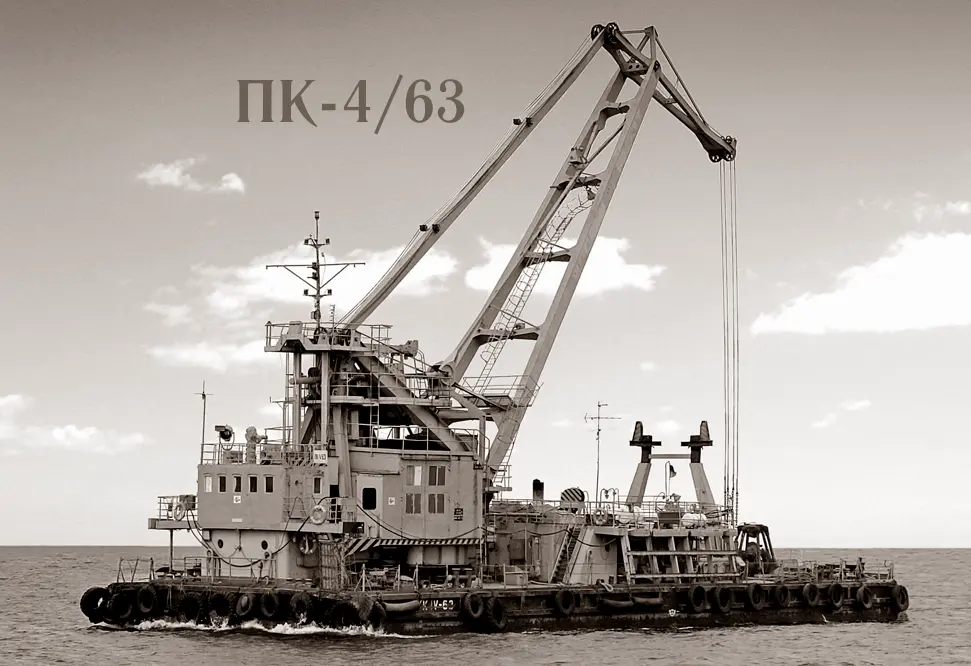
Chernobyl Voyage “PK-4/63”
As part of the “Incredible Port” project
They were young, cheerful, and full of life. In the summer of 1986, the crew of the floating crane PK-4/63 was on a work assignment in the Sea of Azov, where Odesa port fleet sailors were engaged in industrial shell extraction. Of course, they knew about the accident at the Chernobyl Nuclear Power Plant, as well as about the deadly danger of radiation faced by all those involved in the response. But when Chernobyl called them to Pripyat, not a single one hesitated.
Chernobyl required specialists of all kinds – even sailors, as it turned out. The scale of work was enormous. The floating crane PK-4/63 was mobilized from the Port of Odesa to load contaminated soil onto barges, reinforce the banks of the Pripyat River, and build barriers to contain radioactive runoff. Another key task was unloading barges. Large amounts of materials – sand, gravel, cement — as well as metal structures and equipment were needed for repair and construction works at the plant. All of this arrived via the Dnipro and Pripyat rivers.
The crew of PK-4/63 worked very close to the epicenter of the disaster, just five kilometers from Reactor № 4, making it easier for the cleanup teams to receive materials. No one counted how many thousands of tons of soil were moved or how much cargo was handled on the unequipped riverbanks. Such records matter in normal work, when it comes to pay. In the Exclusion Zone, money was not the concern. The focus was on preventing radioactive isotopes from reaching the Pripyat River and then the Dnipro. The only limit on work shifts was radiation itself. Still, few paid much attention to dosimeter readings. Despite understanding the danger, the sailors often worked around the clock when needed.
For seven months – from June through December 1986 – the floating crane PK-4/63 of the Odesa Sea Commercial Port fleet worked in the Chernobyl area. The crew’s efforts were repeatedly recognized by the leadership of UKRRICHFLOT.
The crew rested outside the 30-kilometer zone, in the village of Strakholissia on the shore of the Kyiv Reservoir, at the “White Swan” base. Contrary to common myths, a strict no-alcohol policy was enforced in the zone. Any violations were punished severely. Discipline was part of safety.
Everyone was afraid. Everyone understood that radionuclides do not disappear without a trace, and that the consequences would come later. Yet no one avoided the work. Chernobyl became a test of professionalism, self-sacrifice, and humanity. No one hid behind others – on the contrary, they supported and protected each other.
Later, radiation made itself known through hospital stays and serious illnesses. Almost all crew members faced major health challenges. But none of them regretted doing their duty.
Of the seventeen members of the “Chernobyl crew,” sixteen have already passed away.
In 2021, electrical engineer Valerii Diatlov – the last surviving member of the PK-4/63 crew -published a memorial list of his comrades in the newspaper “Odesa Port Worker.” Among them were Captain Borys Rodionov, Chief Engineer Yevhen Liutenko, Relief Chief Mate Eduard Zelenko, crane operators Hryhorii Makovei, Viacheslav Likutin, Mykhailo Nikolaiev, Yevhen Makovetskyi, and motormen Mykola Sorochynskyi, Yurii Nesterenko…
This list is more than just names. These are people who worked in the radiation zone until the end of 1986, carrying out tasks without which the cleanup would not have been possible.
The Chernobyl voyage of floating crane PK-4/63 is one of the most important chapters in the history of the Odesa Port - an example of how port workers became part of the great fight against an invisible enemy.
Forty years have passed since the accident at the Chernobyl Nuclear Power Plant. For Odesa’s port workers, this date is not only a part of national history, but also a deeply personal memory. We bow in profound respect to those who, at the cost of their own health, protected the people of Ukraine and other countries from the threat of radiation during the liquidation of the consequences of the Chernobyl disaster.