How “the year without a summer” turned Ukraine into Europe’s breadbasket
As Part of the project “Incredible Port”
April 1815. The eruption of Mount Tambora on the island of Sumbawa in Indonesia became the largest volcanic event in recorded human history. Over 70,000 people perished instantly, and the 150 cubic kilometers of sulfur compounds ejected into the atmosphere triggered a global cooling effect on the planet.
The following year, 1816, went down in European history as “the year without a summer,” while in America it was called “eighteen hundred and froze to death.” The widespread crop failures and the dramatic surge in grain prices on the exchanges during the so-called “little volcanic winter” prompted merchants in London, Genoa, Livorno, and Marseille to invest capital in the shares of grain trading companies.
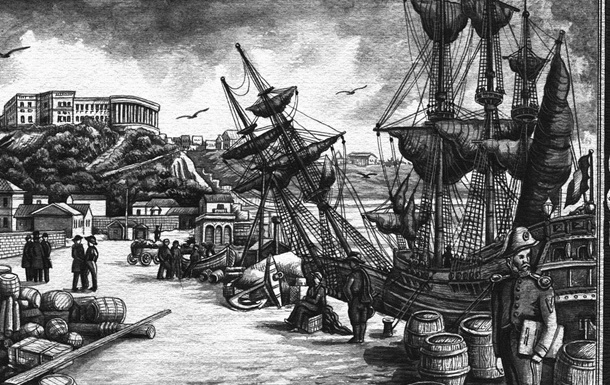
Fortunately, the climatic anomalies barely affected the wheat fields of Ukraine. At that time, caravans of European ships rushed to the Black Sea, laden with gold and silver to be exchanged for wheat. In those years, the port of Odesa became more than just a transshipment hub; it was a gateway through which Europe was given a chance for survival.
The “wheat fever” reached its peak in 1817, when foreign goods were brought to the port of Odesa in unprecedented volumes, among which gold and silver coins predominated. Within just a few years, the port’s revenues multiplied several times, and the proceeds from wheat sales saw an unprecedented surge, making Odesa one of Europe’s main trading centers.
After the “year without a summer,” Ukraine, which had effectively saved the continent from famine, came to be known as the “breadbasket of Europe”.