In two tiers
As part of the project “Incredible Port”
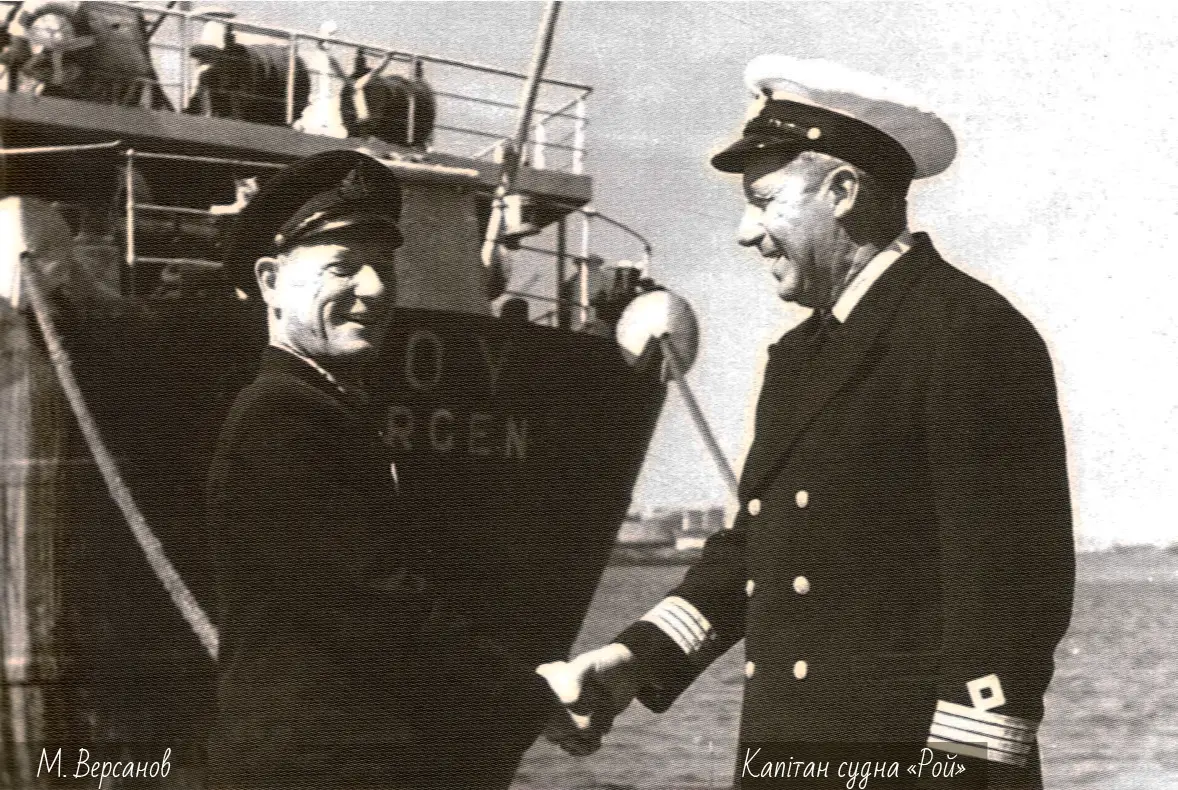
The Norwegian timber carrier «ROY» usually transported stacks of planks up to 8 meters high on its deck. In April 1958, the vessel arrived in Odesa with cargo destined for a metallurgical plant under construction in the city of Bhilai, India.
The main part of the cargo consisted of oversized metal structures. Handling such vessels was not easy, but the Odesa port workers demonstrated ingenuity.
The head of the berth group, Mykhailo Versanov, and engineer Heorhiy Stokfish approached the captain with a proposal to stack the metal structures on the deck as high as the timber—i.e., in two tiers.
The captain agreed, on the condition that the port would retrofit the deck using its own resources and at its own expense. A handshake sealed the agreement. The port workers welded 120 steel chocks (so-called “rims”) along both sides of the deck and installed 50 nine-meter-high stanchions. They then placed and additionally secured two dozen 18-meter trusses on the second tier, with a total weight of 285 tons. «Roy» became the first vessel to depart from the Odesa port with two tiers of metal structures on its deck. Following its example, the English ship John Lyros, the Indian Jalakendra, and other cargo vessels began loading in the same manner.
The new method, which allowed for significant savings of state funds, was actively used by Odesa port workers to secure export equipment bound for India, Vietnam, Egypt, Syria, Cuba, and other countries.