Filming in the Port: “Prychal” by Mykola Tymun
As part of the project “Incredible Port”
The Odesa Port is not only a hub of cargo, machinery, and vessels — it is also a cinematic backdrop admired by directors from around the world. Dozens of films have been shot here, ranging from the classic “Battleship Potemkin” by Sergei Eisenstein (1925) to Luc Besson’s explosive action film “Transporter 3” (2008). In 1997, renowned Italian film director Giuseppe Tornatore filmed his motion picture “The Legend of the Pianist” in the Odesa Port. During the production, part of the Potapovsky Mole was transformed into the waterfront of the New York harbor, and the vessel Lisozavodsk was redesigned to resemble an early 20th-century transatlantic liner. The film, featuring music by Ennio Morricone and starring Tim Roth, received numerous international awards — and a piece of the Odesa Port forever remains part of its history.
Yet the summer of 1973 holds a special place in the cinematic history of the Odesa Port. That year, filming began on “Prychal”— the first and only film dedicated to the men of a purely masculine profession: the dockworkers of a seaport.
According to the filmmakers’ concept, the movie was meant to portray the relationships among port workers during a crucial period of introducing a new cargo-handling technology. However, when the script was shown to the dockworkers themselves, they simply shrugged.
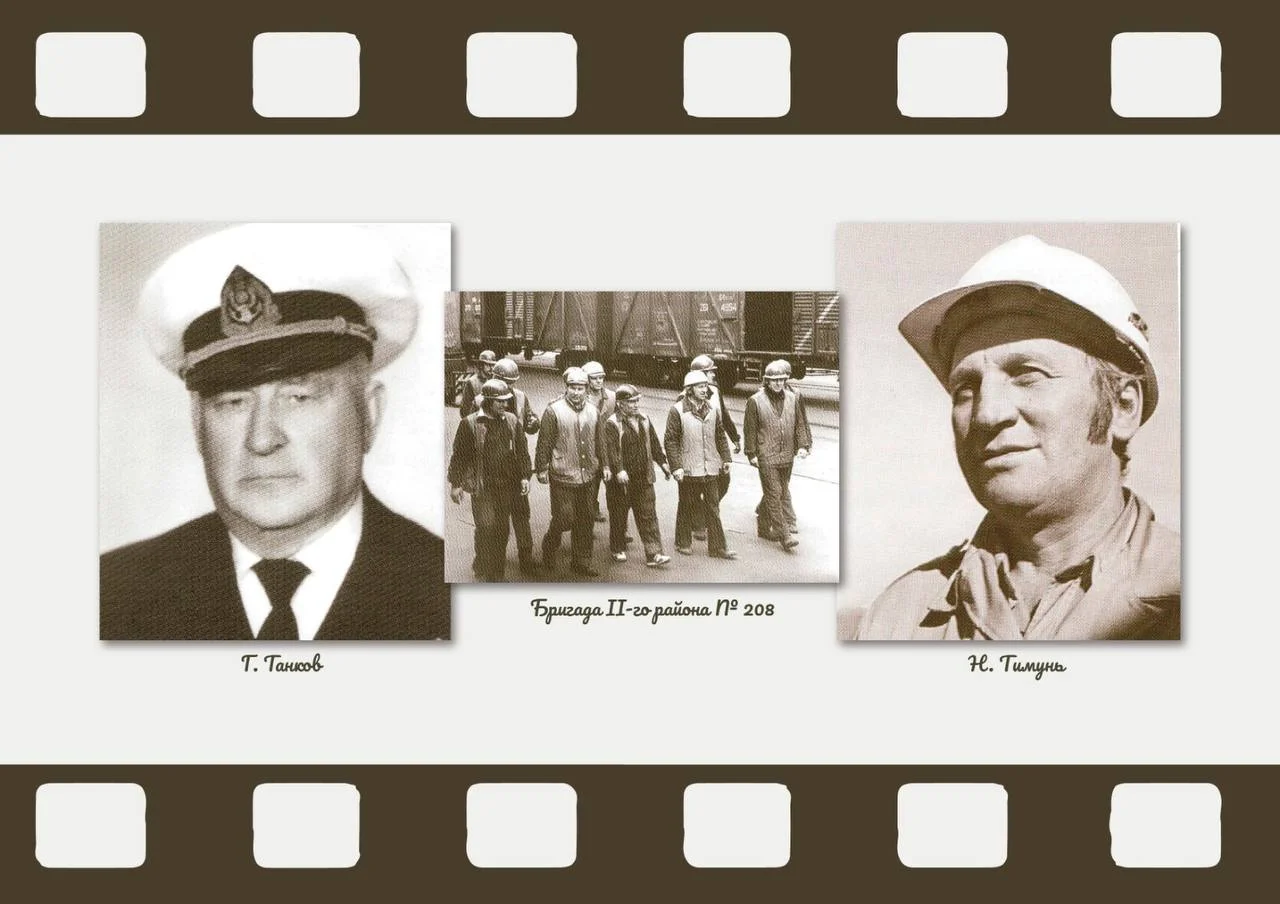
“Something is off here”, said the film’s consultant, Head of the 2nd Cargo District, Hennadii Tankov, frankly. “The conflicts are artificial, the dockworkers don’t feel real. And most importantly — it’s unclear what exactly they are implementing. I have Mykola Tymun’s Brigade No. 208 — now they are the true innovators and rationalizers! What they are doing is now being introduced in all Black Sea ports and beyond. Let’s show their work!”
The idea appealed to the film crew. Director Vadym Kostromenko and screenwriter Leonid Braslavskyi began rewriting the scenes together with the port workers. Soon, the screenplay came to life with authentic details from the everyday working routine of the pier.
The audience saw on screen what Odesa residents were truly proud of. For example, the fully mechanized process of transferring heavy 100-kilogram bags of Cuban sugar from a ship’s hold directly into railway wagons. Notably, the two types of cargo grips on which this technology was based are still used in many ports around the world.
The production scenes involved not only actors, but also dockworkers from Tymun’s team: M. Buniakov, A. Kushnir, V. Krokhmaliuk, I. Kolesnichenko, A. Semenov, A. Skorokhod, and I. Cheban.
The final frame of the film shows the brigade walking toward their berth against the backdrop of the new passenger terminal. In the 1970s–1980s, this was Berth No. 20, where Tymun’s team worked, setting record after record in the unloading of grain and other food imports. Today, it is Berth No. 14.