1944–1948 - THE ERA OF WOMEN’S BRIGADES IN THE PORT OF ODESA
Act. Port of Odesa. 29 May 1944."This act is drawn up to certify that on this date, from 10:00 to 17:30, from the territory of the Port of Odesa, the following was transported beyond the breakwater and dumped on the seabed: one thousand nine hundred (1900) artillery shells… During the lifting, loading, and dumping of the shells, no incidents occurred. Signed: Captain of the Port of Odesa Koval, senior officer of motorboat No. 2 Dubrovskyi."
In April–May 1944, 25,000 artillery shells, nearly 1,000 aerial bombs, 80 high-explosive charges, and hundreds of other explosive devices were removed and neutralized on the port’s territory. But who was responsible for the “lifting, loading, and dumping” of this deadly metal into the sea?
Odesa was liberated from occupation on 10 April. And already on the 11th, the port announced that it was hiring. There were not enough men—the war was still ongoing. Therefore, women’s brigades were formed to carry out unskilled work. They were assigned to clear the territory, fill in craters, and restore the destroyed quay front. Former factory and retail workers, housewives, and even actresses became port laborers.
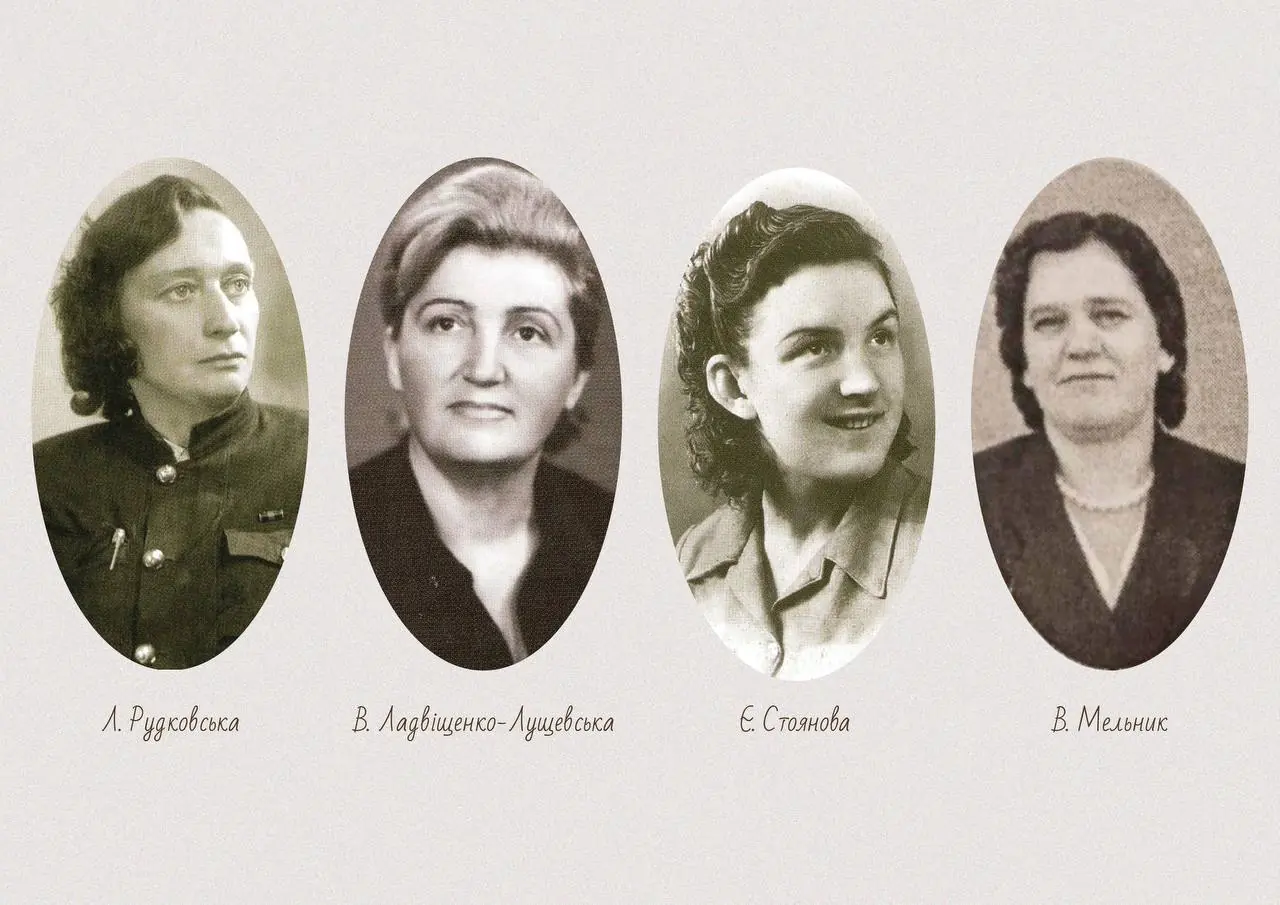
In the port archives, there is a personnel card for citizen Alhyra Kharlampiivna Kologeras, born in 1922, a former actress at the Odesa Film Studio. A representative of a noble family of Greek sailors and merchants (repressed by the Soviet authorities), a widow with a young child, she came to the port’s HR department in April 1944. In those same days, Vera Lushchevska, Yevheniia Stoianova, Liubov Rudkovska, Olena Kokhanova, Valentyna Kravchuk, Nadiia Kostrova, and others were also hired as workers…
The first cargo ships entered the harbor of the Port of Odesa in October 1944. Starting in February 1945, American steamships carrying Lend-Lease supplies and UN food aid began arriving one after another. At the unloading of boxes containing canned meat, pasta, cereals, and powdered eggs, the brigades of Mariia Furdui and Yevheniia Polishchuk completed two to three shifts’ norms. The port management rewarded the best loaders: Vira Oleinychenko, Yefrosyniia Herasymenko, Paraskoviia Ilchuk, Oleksandra Rasniuk…
In March 1945, the port received and commissioned 10 crawler cranes from the American company Manitowoc. Women were assigned to operate the levers of these powerful machines. Coal from the Donbas for heating the homes of Odesa residents - that was their responsibility. Lever toward you, lever away from you, pressing the pedals with all your strength. Imagine how many times these pedals had to be pressed to move 3,000 tons in a single shift!
Representatives of the Manitowoc crane company photographed crane operator Varvara Melnyk at her workplace - for a brochure. “A Ukrainian beauty in the cab of our crane is the best advertisement,” they shouted to the translator over the roar of quay operations. In her old age, Varvara Ivanivna lost the use of her legs. This is an occupational disease, one that brochures never mention.
In 1945, the port’s cargo turnover reached half of the pre-war 1940 level, and in 1946 it exceeded the pre-war figures. So much for the “weaker sex”!
On 9 November 1948, the Director of the Odesa Sea Commercial Port issued an order prohibiting the employment of women in heavy labor. From that point on, the profession of stevedore in the Port of Odesa became exclusively male once again.