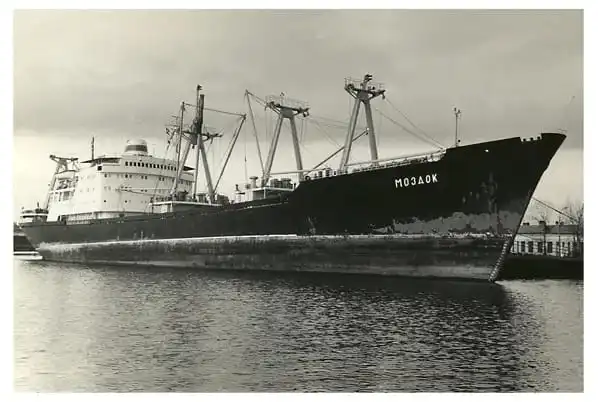
“MOZDOK”
As part of the project “Incredible Port”
During the night of 13 January 1972, the air temperature in Odesa shifted abruptly from an unseasonably warm +15°C to –20°C. By morning, due to this extreme drop, the sea along the coast “boiled” with an exceptionally dense fog. In that fog, 2.5 miles off the “Delfin” beach, the Bulgarian tanker Lom rammed the Mozdok, a dry cargo motor vessel that had departed from the Odesa Port bound for Vietnam. This became the largest maritime disaster ever to occur near the shores of Ukraine’s Black Sea capital.
In the holds of the sunken Mozdok there were 306 types of cargo (!): helicopters, tractors, automobiles, metal-processing machines, hydroturbines, power transformers, electric motors, medical equipment, household electrical appliances, film-projection equipment, radio devices, books and magazines, paper rolls, sheet steel, fireproof bricks, asbestos… and one thousand tonnes of an extremely dangerous plant-protection agent – the insecticide trichloromethyldimethane (commonly known as dust), which by that time had already been banned in most developed countries.
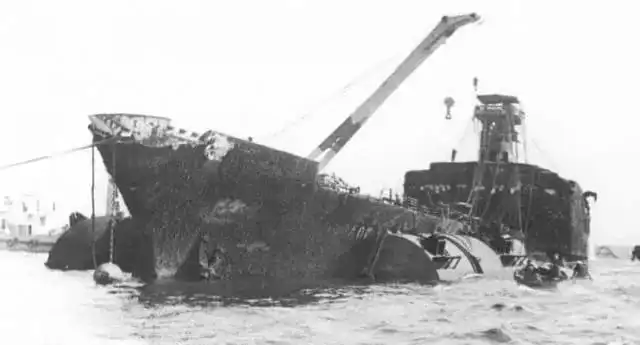
The Mozdok’s funnel protruded three metres above the water, while the ship’s superstructures, conversely, lay one and a half metres below the surface - posing a serious threat to navigation in the Odesa Bay. In addition, leakage of the aforementioned insecticide into the sea could have triggered an environmental disaster in the resort city’s coastal zone, home to over a million residents.
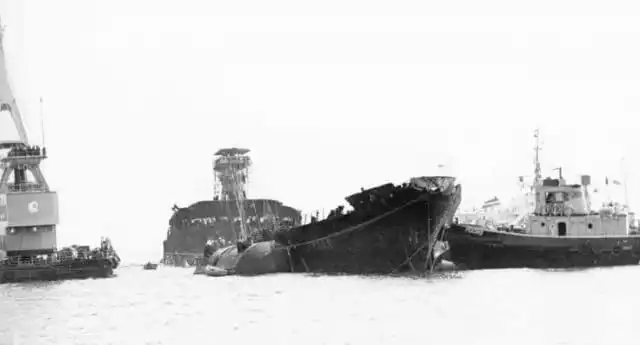
Odesa had never seen - and, we hope, will never again see - a rescue operation of such scale. The work to clear the port’s approach channel of the sunken vessels Mozdok and Lom began in the spring of 1972 and continued for three entire navigation seasons. Raising the Mozdok required years of intense effort by hundreds of specialists from the ARPTR of the Black Sea Shipping Company (the Expeditionary Unit for Emergency, Rescue, and Search-and-Technical Operations), numerous scientific and design institutions across the country, as well as the production units of the Odesa Port and the Odesa Ship Repair Plant No. 1.
In the first phase, the Mozdok was partially unloaded. In the challenging conditions of the underdeck space, with near-zero visibility, divers carefully maneuvered and slung the cargo. Over 171 working days, 31,082 units of various cargo weighing between 10 kg and 86 tons were recovered from underwater. On certain days, up to one hundred divers worked on the vessel.
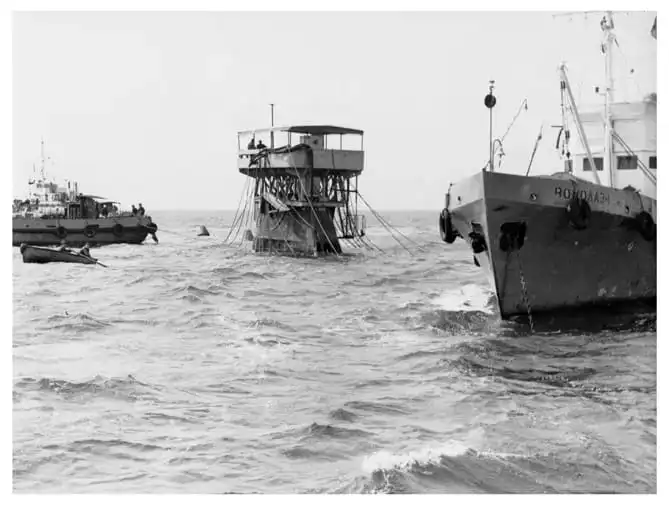
Next began the actual salvage operation using traditional pontoons and a revolutionary technology developed by the Dutch company Weiss Müller. In 1965, the Dutch had pioneered a method in world practice to raise a ship from the seabed by pumping white polystyrene beads (commonly known as Styrofoam) into its holds. For 42 days, a true mobile “factory” for processing polystyrene raw material operated near one of the Odesa Port’s berths. A total of 352 tons (nine railway wagons) of beads were expanded, producing 10,360 cubic meters of granules.
The operation of pumping tiny polystyrene beads from a specially equipped floating base into the holds of the cargo vessel Mozdok was carried out over 14 days. Water from the holds was squeezed out through specially installed drainage pipes.
On 18 August 1974, the salvaged Mozdok was towed to Berth 39 of the port, accompanied by several vessels. The convoy was supervised by Odesa Port pilot Kim Belenkovich, who operated from the CPU – the central control post for the salvage operation – installed on the Mozdok’s funnel. “I am the first pilot in the world to bring a ship into port while sitting on its funnel!” joked K. Belenkovich. In 2024, the book “Pilot on the Funnel” was published in Odesa, written by the pilot’s daughter, Vira Zubarieva, a journalist and author who now lives in the United States.